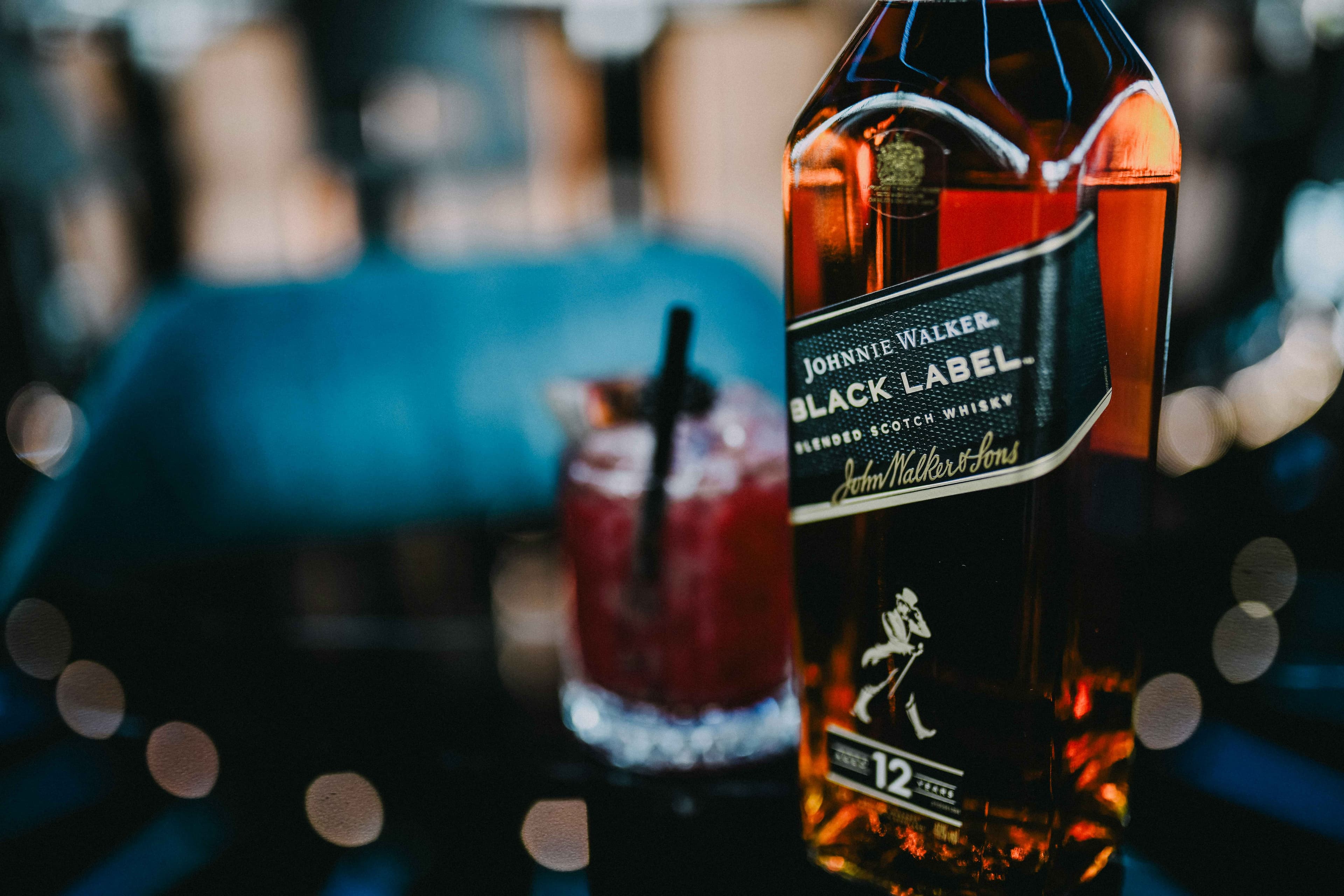
An Evening Of Whisky Experiments In Mumbai: Indian Flavours Meet International Techniques With Johnnie Walker Black Label

The world of Indian whisky culture stands on the brink of transformation, and nowhere was this more evident than at a recent Whisky Experiments - Editor's Table event at Mumbai's iconic Slink & Bardot. At the helm of this evening's explorations was Tim D Philips, whose credentials extend far beyond his role as Global Brand Ambassador for Johnnie Walker. The 2012 World Class Global Bartender of the Year and recent inductee into The Keepers of the Quaich in Scotland - one of the whisky world's most prestigious guardianships - brought both technical mastery and genuine curiosity to the table.
His brief seemed straightforward enough - ‘reimagine Johnnie Walker Black Label through the lens of Indian flavours’. Yet what unfolded over the course of the evening revealed something far more profound about how there’s a strong dialogue emerging between tradition and innovation in India's drinking culture.

Four Flavours, Four New Takes
The evening centred around four distinct flavour profiles - fresh, spice, coffee, and fruit, each explored through a carefully crafted serve that showcased different dimensions of Black Label's complexity.
The evening began with a Lowlands Highball, bringing with it an unexpected elegance. The highball, combining Black Label with white aromatised wine and jasmine cordial, is topped with sparkling water and finished with edible flowers. It was a delicate introduction that set the tone for an evening of sophisticated experimentation.
But it was the spice-driven dry Seven Spice Highlands that truly challenged conventions and made the room sit up and take notice. Philips acknowledged its polarising nature, dry Manhattans rarely win popularity contests he admits, yet his interpretation, featuring a homemade vermouth infused with seven Indian spices including saffron, green cardamom, and green peppercorns, demonstrated how spice needn't be a blunt instrument. "Spice here sometimes is connected very deeply with heat," Philips explained. "But realistically, spice is best used in Indian cuisine in many forms."
Next came a cocktail that for many was a standout, the Islay Old Fashioned, made with cold drip coffee, which was an ode to the growing coffee shop culture Philips has seen in Bengaluru and beyond. The coffee cocktail avoided the obvious espresso martini cocktail route, instead stirring Black Label with cold brew coffee, vermouth, and jaggery syrup, finished with a spritz of mezcal that accentuated the smoky notes of the spirit. The result sat somewhere between an Old Fashioned and a Negroni, accentuating whisky's darker, sandalwood notes.
Perhaps most audacious was the final serve, a Speyside Banana Lassi cocktail which combined whisky and a dairy base. Mixing Black Label with fresh banana, yoghurt, cardamom, a pinch of salt, and coconut milk might sound unconventional, but it was a testament to the whisky's versatility and the potential for cross-cultural flavour experimentation.

The Art Of Consistency
Beyond the cocktails themselves, Philips offered fascinating insights into the craft of whisky blending. He recounted how Emma Walker, Johnnie Walker's Master Blender, and her team of 12 whisky masters work daily to maintain consistency across decades, a task he compared to being asked to recreate a dish exactly as you made it 40 years ago, but with entirely different ingredients.
His experience tasting Black Label from the early 1970s alongside a current which he deemed to have remarkable similarity underscores the blenders' mastery. "Over the course of 50 years, you lose a bit of bottle brightness," Philips noted, "but the flavour profile is still there." He highlighted that this consistency is a particularly remarkable feat considering the whiskies from 1970 had access to completely different casks,pre-dating the 1964 Bourbon Act that standardised American oak barrel production.

Ignoring Trends, Embracing Identity
Philips praised Indian bartenders for developing a distinctly local approach. "One of the great things Indian bartenders have started to do is ignore trends," he observed. Rather than mimicking what's popular in New York or London, they're working with local ingredients and tastemakers to create cocktails that resonate with their specific audience.
This philosophy aligns perfectly with the Whisky Experiments programme's broader mission, demonstrating that whisky, particularly a blend as complex as Johnnie Walker Black Label can adapt to local palates whilst maintaining its essential character.
An Evening of Discovery
The beauty of the evening lay in expanding the conversation around the spirit. Philips encouraged questions throughout, creating an atmosphere that was part masterclass, part communal exploration. When asked about Indian coffee for example, with the country's single-estate coffee culture emerging onto the global stage, he readily admitted his limited experience, opening the door to dialogue about how local ingredients could further shape his experiments.
The progression of drinks too created a journey that moved from the delicate and floral to the bold and complex. What made the night particularly compelling was how learnings shifted throughout the evening. The Seven Spice Highlands showed how spice functions differently in Indian versus Western contexts. The Islay Old Fashioned, meanwhile, showcased the potential of coffee beyond the cafe, and while the Speyside Banana Lassi generated initial scepticism, it transformed into genuine surprise at how well the flavours harmonised.

The Bigger Picture
As India's cocktail culture continues its evolution, evenings like this suggest the country isn't simply catching up with global trends, it's charting its own distinctive path, one that respects tradition while embracing innovation and its own native flavours. The willingness to pair whisky with lassi, to infuse vermouth with Indian spices, to reimagine classic structures through a local lens, this is what cultural cocktail confidence looks like in a glass.
By creating space for experimentation and validating Indian bartenders' instinct to forge their own path, Whisky Experiments is facilitating a conversation about what whisky can be in different contexts. The old rulebook, it seems, is being rewritten with distinctly Indian ink, and the results that are worth a second look.
*Drink Responsibly. This communication is for audiences above the age of 25.